
When a company needs to arrange an international shipment, the first question is almost always the same: How much does it cost?
This is a legitimate question, but it is rarely answered immediately. Unlike many other services, the cost of an international shipment is not standardized. There is no fixed price, because each shipment is the result of a combination of operational variables.
To really understand how cost is formed, it is useful to start with a broader view of the process. In this regard, it may also be useful to delve into the comprehensive guide to international shipping (transportation, documents, timing and risks), which frames the entire logistics system.
What does the cost of an international shipment depend on
The cost of an international shipment is not determined by a single factor, but by a number of interacting elements. Among these, the first to consider is undoubtedly the nature of the goods.
Weight, volume, and type directly affect price. A shipment consisting of industrial pallets or machinery will have completely different dynamics than a light load. Not surprisingly, many companies that regularly export use structured solutions such as international pallet shipments, which allow for more efficient handling but require careful evaluation.
Next to the commodity, the destination plays a key role. Shipping within Europe generally involves lower costs and smoother handling.
Different is the case with non-EU routes or countries with operational specificities, such as the United Kingdom or Turkey, where customs and documentary variables come into play that also affect the final cost.
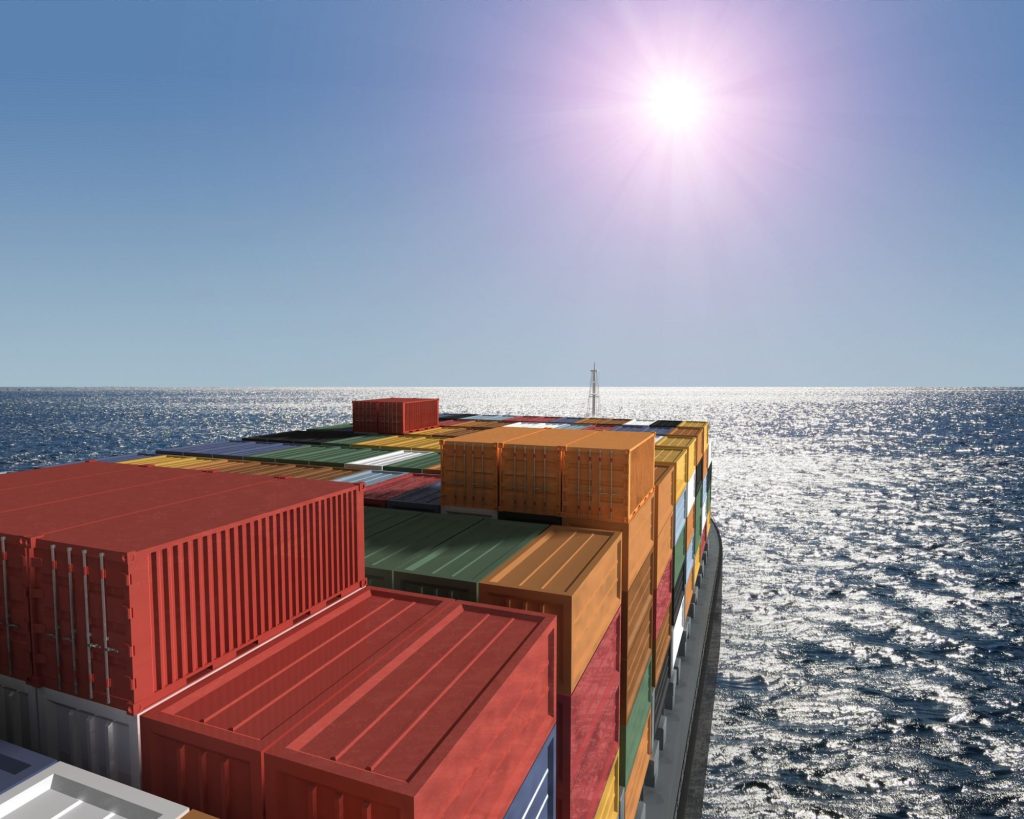
Another determinant is the mode of transport. Road transport is the most popular option in Europe, while sea transport is often preferred for large volumes. Air transport, on the other hand, is chosen when speed is a priority, but involves significantly higher costs. The choice is never neutral: it directly affects price and must be consistent with operational needs.

Groupage or dedicated transport: a choice that affects cost
One of the most relevant aspects in defining Of the price is the type of shipping.
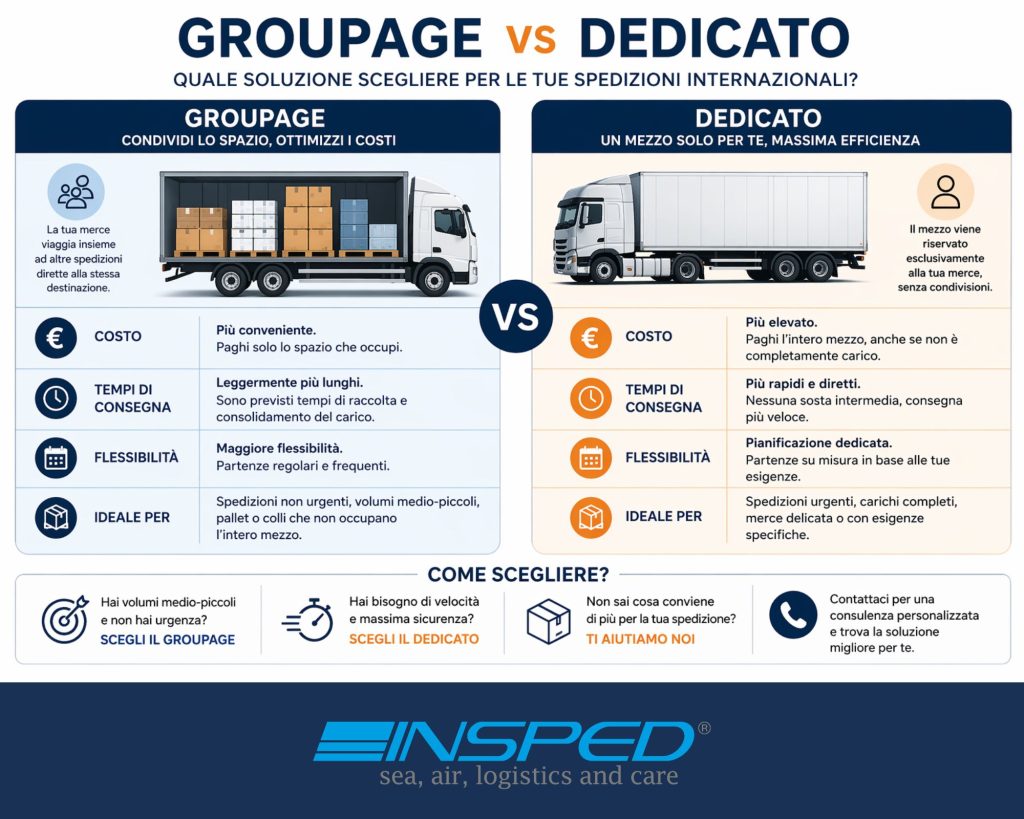
In the case of groupage, goods travel together with other cargo, allowing space to be optimized and costs to be reduced. This is a popular solution, especially for non-urgent or low-volume shipments.
However, it requires more flexibility on timing.
In contrast, dedicated transport involves the exclusive use of a vehicle. This provides greater speed and control, but involves a higher investment. The choice between these two modes is not only economic, but strategic.
To learn more about the differences, it is also useful to consult the comparison between groupage and full load, which helps to navigate the available options.
The role of documentation and customs
One of the less visible but more cost-impacting aspects concerns documentation.
Errors or inaccuracies in documents can generate delays, additional checks and extra costs. This is particularly evident in non-EU shipments, where customs management becomes central.
The proper preparation of documents is not just a formality, but an operational component of shipping. For this reason, it is always advisable to check all the necessary documentation in advance, as explained in the guide dedicated to documents for international shipments.
How much does international shipping cost
At this point it is clear why a standard price cannot be set.
It is possible, however, to give some general guidelines. A pallet shipment to Europe can start from a few hundred euros, while dedicated or urgent solutions involve higher costs. Intercontinental shipments, especially by air, can significantly increase the budget.
These directions should always be read as guidelines. The true cost emerges only from a specific analysis, taking into account all the variables involved.

The mistakes that increase costs
Very often, the problem is not the initial cost, but what happens during the process.
An incorrect choice of transport mode, insufficient planning, or inaccurate document management can generate unanticipated additional costs. In many cases, urgencies arise precisely from a lack of planning.
These issues are also explored in the article on common mistakes in international shipping, which shows how small details can have a significant impact.
How to optimize the cost of an international shipment
Optimizing costs does not simply mean spending less, but making more informed decisions.
Good planning allows you to choose the most suitable mode, avoid emergencies, and better manage loads. Standardization of shipments, such as by pallets, can also help improve overall efficiency.
In this context, the support of a logistics partner becomes a strategic element, because it allows to prevent errors and evaluate the most effective solutions in advance.
The cost of an international shipment is not a fixed number, but the result of a series of decisions.
Understanding these mechanisms enables companies to better manage their shipments, reduce risk, and optimize resources. In an increasingly competitive environment, this awareness is a real advantage.
FAQ
How much does it cost to ship a pallet overseas?
The cost depends on weight, destination and mode of transport, but can range from a few hundred euros to larger amounts.
What is the most economical solution?
Groupage is generally the most economical solution, but it is not always the most suitable in operational terms.
How can you reduce the cost of a shipment?
Planning ahead and choosing the logistics solution most consistent with the needs of the shipment.
If you need to organize an international shipment and want to have a realistic cost estimate, it is essential to analyze all variables before departure.
👉 Contact us to evaluate the best solution for your shipment.